
The dream is a potent one: trading a fixed address for the boundless freedom of the open road, swapping routine for a life of continuous adventure and exploration. For a growing number of people, this is the powerful allure of the nomadic lifestyle, a chance to redefine home on their own terms. Yet, beneath the romantic imagery of sunsets over national parks and waking up in a new, stunning landscape every few weeks, lies a critical, pragmatic question that every prospective full time RVer must confront: How much does it truly cost to live this dream?
The answer is as varied as the American landscape itself. Ask ten full time RVers and you might get ten different answers, with monthly budgets ranging from a frugal $1,500 to a more comfortable $5,000, and even soaring upwards of $8,500 for those who prefer luxury and a rapid pace. This wide spectrum isn’t a sign of conflicting data; it is the most important truth of RV life. The cost is not a fixed number but a dynamic figure sculpted by three fundamental choices: the rig you drive, the pace you keep, and the style you live.
This report will dissect the financial reality of living in an RV full time, moving beyond simplistic averages to provide a definitive, actionable framework. We will break down every expense, from the initial purchase of the right RV to the recurring monthly bills and the often-underestimated costs of maintenance and legal compliance. The goal is to empower you to calculate your own true cost, transforming the abstract dream of a full time adventure into a concrete, sustainable financial plan.
The Financial Crossroads
The most common catalyst for considering a transition to full time RVing is the pursuit of financial relief. The question of whether it is financially smart or cheaper than traditional housing is central to the decision-making process. The answer is a nuanced “yes, but only with deliberate strategy.” It is a path that can lead to significant savings, but it is by no means an automatic route to a cheaper existence.
The primary financial advantage of the RV lifestyle is the potential to eliminate the largest expenses in a typical household budget: a mortgage or rent payment, property taxes, and certain utility bills. For individuals or a married couple downsizing from a home in a high-cost-of-living area, the impact can be immediate and profound. Selling a house and using the proceeds to pay off all outstanding debts while purchasing a truck and RV with cash is the most direct path to financial freedom on the road. This single move can slash monthly overhead and create a debt-free foundation for the new lifestyle.
Traditional Home
- Appreciating Asset: Typically builds equity and value over time.
- Fixed Costs: High overhead from mortgage/rent, property taxes, and HOA fees.
Full-Time RV
- Depreciating Asset: Loses value over time, similar to a car.
- Investment in Experience: Frees up capital by eliminating mortgage and property taxes for a life of travel.
However, the myth that full time RVing is inherently cheap is a dangerous one. The reality is that this lifestyle introduces its own set of significant and often unpredictable expenses. A hefty loan for a new, luxurious RV can easily result in a monthly payment equal to or greater than a mortgage. When this is combined with the costs of staying in high-end RV parks or resorts, which can match or exceed monthly rent, any potential savings are quickly nullified. Furthermore, the constant wear and tear from travel leads to frequent and expensive repairs, a real threat that many newcomers underestimate.
The financial viability of RV life is largely determined by the choice between a stationary and a traveling lifestyle. Living in an RV in one location for an extended period is significantly more affordable, with some reporting monthly costs as low as $1,000 to $3,000. This approach dramatically reduces the two largest variable expenses: fuel and nightly campground fees. In contrast, a family that travels frequently, moving to a next destination every week or two, will see their budget swell with fuel and accommodation costs.
Ultimately, the financial wisdom of living in an RV hinges on a critical shift in perspective. An RV is not a financial investment in the way a house is. A traditional home is typically an appreciating asset that builds equity over time. An RV, like any vehicle, is a rapidly depreciating asset. Financing an RV means making payments on an asset that is losing value, and it is common to be “upside down” on the loan almost immediately. Therefore, the decision to purchase an RV should not be viewed as a financial investment, but as an investment in life experiences. It is the purchase of a tool that enables a particular kind of life, and its financial success depends entirely on whether it is used as part of a disciplined plan to minimize debt and live simply.
The Initial Outlay: Your Ticket to Freedom
Before the first mile is driven, the journey into full time RV living begins with a significant financial outlay. The sticker price of the RV itself is the largest and most obvious expense, but it is only one component of the total “drive-off” cost. Failing to budget for the associated taxes, fees, and essential gear can create immediate financial stress and delay the start of the adventure.
The Rig Purchase
The choice of RV is the single most important decision, dictating comfort, mobility, and the foundational cost of the lifestyle. The market offers a vast array of options, from small, towable trailers to bus-sized luxury motorhomes, with prices varying dramatically between new and used models. A clear understanding of these categories and their associated costs is essential for setting realistic expectations.
New RV Purchase Price Ranges
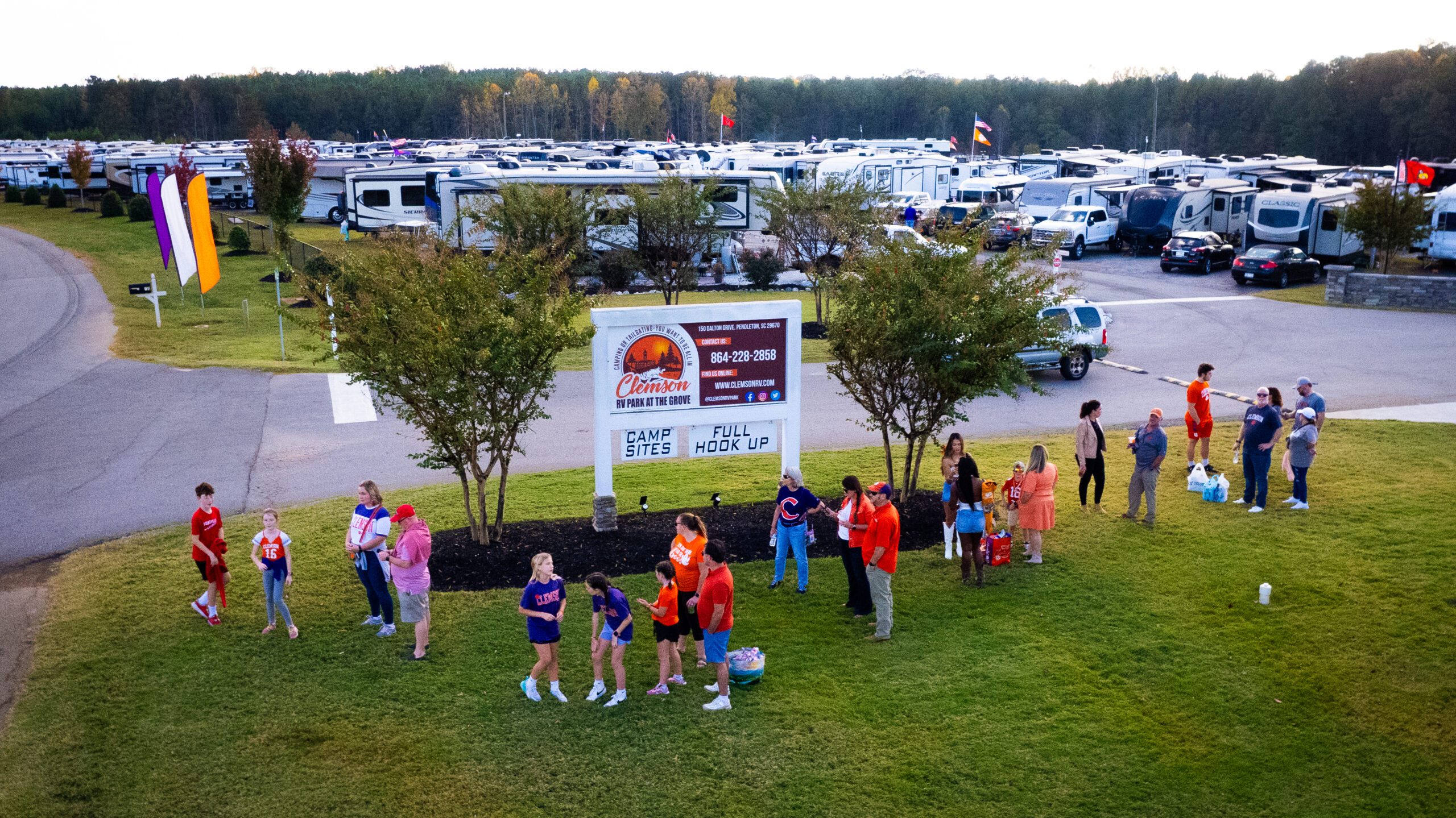
This chart shows the typical starting price for new RVs in each class. For information about RV camping site rates, see this detailed rate chart from Clemson RV Park. Actual costs can be much higher.
Beyond the Sticker Price
The purchase of the rig is just the first step. A realistic startup budget must account for several other immediate and necessary expenses. A good rule of thumb is to budget an additional 10-15% of the RV’s purchase price for these “hidden” costs.
- Taxes, Title, and Registration: These mandatory government fees are a non-trivial part of the initial cost and vary widely by state. They can add thousands of dollars to the final bill.
- Essential “Day One” Gear: RVs do not come equipped with everything needed for the first camping trip. New owners are often surprised to learn they must purchase a list of non-optional items just to connect to campground utilities safely and legally. This includes sewer hoses, a water pressure regulator, leveling blocks, a high-quality surge protector, wheel chocks, and freshwater hoses.
- Upgrades and Customization: While the base model RV is functional, it is often not optimized for the demands of full time living. Many experienced RVers immediately invest in upgrades to enhance comfort, safety, and self-sufficiency. Common initial upgrades include replacing the factory mattress, installing solar panels and a better battery system for boondocking, and upgrading to a more robust internet connectivity setup with cellular boosters or satellite dishes.
This initial phase of purchasing and outfitting the rig serves as the first major test of an RVer’s ability to plan ahead. Those who meticulously research and budget for these ancillary costs are far more likely to experience a smooth, stress-free transition into their new mobile life.
Deconstructing Your Monthly Budget
Once the initial investment is made, the focus shifts to managing the ongoing monthly costs of living in an RV. A successful and sustainable RV lifestyle is built on a foundation of diligent budgeting. These expenses can be broken down into two categories: fixed costs, which are relatively stable and predictable, and variable costs, which fluctuate based on lifestyle choices and represent the “levers” that can be adjusted to manage the budget.
A. Fixed Monthly Costs (The Non-Negotiables)
These are the recurring bills that form the baseline of your monthly budget. They are largely non-negotiable and must be paid regardless of where you are or how often you travel.
- RV Loan Payment: For those who finance their rig, this is the most significant fixed cost. Average monthly payments can range from $225 to $650, but for larger, more expensive RVs, this figure can be substantially higher, rivaling a traditional mortgage.
- RV Insurance: This is a critical and mandatory expense. A standard policy is not sufficient; full time RVers require a specialized “full-timer’s policy” that functions more like a homeowner’s policy, providing personal liability and coverage for personal belongings. On average, these policies cost between $125 and $200 per month, or $1,500 to $2,500 annually. In a state like South Carolina, all motorized RVs must carry minimum liability coverage of $25,000 for bodily injury per person, $50,000 per accident, and $25,000 for property damage, along with uninsured/underinsured motorist (UIM) coverage. The average annual premium in South Carolina is around $973 for a motorhome and $470 for a travel trailer, but a full-timer’s policy with enhanced coverage will cost more.
- Health Insurance: This is a major logistical and financial challenge for nomads. Standard HMO or PPO plans often have limited out-of-state coverage. Full-timers must seek out plans with a national network or consider options like health-sharing ministries. A realistic budget is $200 to $400 or more per person, per month.
- Connectivity (Cell Phone & Internet): In the modern era, reliable internet is not a luxury but a utility, essential for remote work, navigation, and staying connected with family members. Due to the variability of coverage across the country, many serious RVers subscribe to multiple carriers (e.g., Verizon and AT&T) for redundancy. A budget of $50 to $200 per month is typical.
- Mail Forwarding Service: Since a physical address is required for legal and financial purposes, a mail forwarding service is a necessity. These services provide a legal street address, receive all mail, and forward it to your location on demand. Top services like Escapees RV Club, MyRVmail, and Traveling Mailbox cost between $15 and $30 per month, plus the cost of postage for forwarded packages.
B. Variable Monthly Costs (The Lifestyle Levers)
These are the expenses that fluctuate the most and where an RVer has the greatest control. How these costs are managed will ultimately determine whether the lifestyle is frugal or expensive.
- Campsite & RV Park Fees: This is arguably the most significant variable expense. The cost can range from $0 per night when “boondocking” (camping for free on public lands like BLM or National Forest land) to over $150 per night at luxury RV resorts with amenities like pools and clubhouses. Nightly rates at private RV parks typically fall between $40 and $70, while state parks are often a more affordable $20 to $40. The key to managing this cost is to stay longer; monthly rates offer substantial discounts, with a common range of $400 to $1,500, often including utilities. Memberships like Passport America (50% off nightly rates), Harvest Hosts (free overnight stays at wineries, farms, etc.), and Thousand Trails (a network of campgrounds for a single annual fee) are popular strategies for reducing this expense.
- Fuel (Gas/Diesel & Propane): This is the direct cost of mobility. For a stationary RVer, this expense is negligible. For a family that is constantly on the move, it can be one of the largest budget items. Depending on the size of the rig, fuel efficiency (which can be as low as 6-8 MPG for a large Class A), and the distance traveled, a monthly fuel bill of $200 to $700 or more is common. Propane for heating, cooking, and hot water adds another $30 to $100 per month.
- Maintenance & Repairs: This is the budget category that derails more RVing dreams than any other. An RV is a house on wheels, subjected to the constant vibrations and stresses of an ongoing earthquake. Things will break, and it is not a matter of “if” but “when”. The most critical financial discipline an RVer can adopt is to treat maintenance not as an unexpected emergency but as a fixed, recurring cost. Experts and seasoned RVers universally recommend setting aside a minimum of $100 to $300 every single month into a dedicated repair fund, regardless of whether anything is currently broken. This fund covers routine maintenance like oil changes and tire replacements, as well as the inevitable repairs to plumbing, electrical systems, and appliances. Many also advise maintaining a separate emergency fund of at least $5,000 for major, catastrophic failures. This proactive approach transforms a potential crisis into a predictable, manageable expense.
- Groceries & Dining Out: This category is similar to a traditional household budget but can be influenced by location. Access to discount grocery stores may be limited in remote areas, leading to higher food costs. A typical budget for a couple ranges from $400 to $1,000 per month, depending heavily on dining-out habits.
- Entertainment & Miscellaneous: This catch-all category includes everything from admission to attractions and national parks to laundry, tolls, and pet care. A reasonable budget is between $100 and $500 per month, depending on the family’s activities.
C. Putting It All Together: Three Realistic Monthly Budgets
To illustrate how these costs come together, here are three sample monthly budgets representing different travel styles. These are not just estimates; they are reflections of real-world spending patterns reported by the full time RVing community.
The Rules of the Road
The freedom of the nomadic lifestyle is not absolute; it is built upon a framework of legal and logistical requirements that are often surprising to newcomers. Successfully living in an RV full time demands a level of administrative diligence that rivals managing a small business. From establishing a legal home base to understanding local ordinances and pacing travel, meticulous planning is the key to a sustainable life on the road.
Establish Domicile
Choose a legal home state (like FL, TX, or SD) for taxes, mail, and registration. This is a critical financial decision.
Know Local Laws
Research local ordinances. Many areas limit long-term stays in RVs, even in RV-friendly states. Most parks have stay limits.
Pace Your Travel
Avoid burnout with the “3-3-3 Rule”: travel no more than 300 miles, arrive by 3 p.m., and stay for at least 3 days.
A. Establishing a Home Base: The Critical Domicile Decision
Every full time RVer must have a domicile—a legal, permanent home state. This is not optional; it is a legal necessity for critical functions like paying taxes, voting, obtaining vehicle registration and insurance, and even accessing healthcare. The choice of domicile state is one of the most consequential decisions an RVer will make, as it directly impacts major budget items like income taxes and insurance premiums.
The “Big Three” domicile states for RVers are Florida, Texas, and South Dakota. Their primary appeal is that they have no state income tax, which can result in significant savings for those earning an income on the road. The process for establishing domicile in one of these states generally involves:
- Acquiring a physical street address through a mail forwarding service.
- Traveling to the state to register all vehicles (the RV and any tow or towed cars).
- Obtaining a new driver’s license from that state’s DMV.
- Registering to vote in the new home county.
It’s crucial to understand that domicile is about “intent.” To defend a domicile choice against a challenge from a former, high-tax state, an RVer must demonstrate a clear intention to make the new state their home. This involves more than just paperwork; it means using the new address for all legal and financial matters and building connections, such as with doctors, banks, and other professionals, in the new state. The mail forwarding service is the linchpin of this entire structure, providing the physical address needed to access the legal and financial systems of the chosen state.
For those with ties to South Carolina, it is also a viable, though less common, choice. South Carolina law permits full time RV living on private property with the owner’s consent, provided local zoning ordinances are respected. The process of establishing residency follows the same general steps: obtaining a legal address, registering vehicles with the SC DMV, getting a South Carolina driver’s license, and securing insurance that meets state requirements. While South Carolina does have a state income tax, it may be the logical choice for those with strong family, business, or professional connections to the state.
B. Can You Live Permanently in an RV? A Look at State and Local Laws
The question of whether one can live permanently in an RV is a common one, and the answer is a complex “yes, but it depends on where.” While many states are generally RV-friendly—including Florida, Texas, Arizona, and South Dakota—the laws governing long-term stays can vary dramatically not just from state to state, but from county to county and city to city. It is absolutely essential to research and verify local ordinances before attempting to stay in one location for an extended period.
Stay limits are a key factor. Most National Parks and State Parks enforce a 14-day maximum stay to prevent homesteading and ensure access for all visitors. Private RV parks offer more flexibility, with options ranging from nightly stays to monthly or seasonal leases. In South Carolina, for example, many parks allow stays of up to six months. However, some municipalities have specific ordinances that prohibit using an RV as a permanent dwelling, regardless of where it is parked.
C. Pacing Your Adventure: The 3-3-3 Rule for Sustainable Travel
The initial excitement of the RV lifestyle can lead to burnout if not managed properly. Many new RVers attempt to cover too much ground too quickly, turning their dream into a grueling marathon of long travel days. To combat this, the seasoned RVer community has developed a popular guideline known as the “3-3-3 Rule”.
The logic behind this rule is sound. Limiting driving to 300 miles reduces driver fatigue, which is a significant safety concern when piloting a large vehicle. Arriving by 3 p.m. ensures there is ample daylight to safely navigate the campground, set up the rig, and troubleshoot any issues without the stress of working in the dark. Finally, staying for at least three days transforms the experience from mere transit into actual travel, providing enough time to rest, explore the area, and truly enjoy the destination. This rule is not rigid; it is a flexible concept with variations like the 2-2-2 or 4-4-4 rules, but its core principle of slowing down is essential for long-term sustainability and enjoyment of the nomadic lifestyle.
Your Home on Wheels
The recreational vehicle is the heart of the full time experience—it is at once a vehicle, a home, and a significant financial asset. Selecting the right RV for year-round use and committing to its rigorous maintenance schedule are fundamental to a successful and comfortable life on the road. Not all RVs are created equal, and understanding the difference is paramount.
A. Is There an RV You Can Live in Year-Round? The Four-Season Question
Yes, it is possible to live in an RV year round, but doing so comfortably and safely, especially during the winter months or in extreme heat, requires a specially equipped vehicle. Standard RVs are typically designed for recreational use during temperate seasons. A true “four-season” or “all-season” RV is built to a higher standard to withstand a wider range of temperatures and conditions.
What Makes a “Four-Season” RV?
- Enhanced Insulation: Higher R-value in walls, floor, and ceiling.
- Heated Underbelly: Protects tanks and pipes from freezing.
- Double-Pane Windows: Reduces heat transfer and condensation.
- Upgraded Furnace & A/C: More powerful systems for extreme temperatures.
RV Lifespan & Maintenance
Full-time use accelerates wear, shortening an RV’s life to 10-20 years. Proactive maintenance is not optional—it’s essential.
Top Threats to Longevity:
- Water Intrusion (from sealant failure)
- Roof Damage
- Tire Neglect
Several manufacturers are known for producing durable, well-insulated RVs suitable for full time living. Brands like Arctic Fox, Oliver, and Outdoors RV are specifically designed with harsh weather in mind, making them popular choices in regions like the Pacific Northwest and Canada. Other brands, such as Grand Design, Lance, and Highland Ridge, also offer robust four-season packages on many of their models. Investing in a true four-season rig is not just a luxury for those who plan to camp in snow; the superior build quality provides better durability and comfort for the rigors of full time use in any climate.
B. The Real Lifespan of a Full-Time Travel Trailer
When an RV becomes a primary residence, its lifespan is measured differently than that of a recreationally used vehicle. While a well-maintained travel trailer can last 20 years or more, the general consensus is that full time living accelerates wear and tear, shortening its effective life to an average of 10-20 years. This is because most RVs are designed and built for occasional recreational use, not the relentless stress of daily life and constant travel.
The longevity of a full time rig is determined less by its age or mileage and more by its build quality and, most importantly, its maintenance regimen. The single greatest threat to an RV’s life is water intrusion. Water leaks, often caused by the degradation of sealants on the roof and around windows and vents, can lead to rot, mold, and catastrophic structural damage. This is why proactive, preventative maintenance is not just recommended; it is essential.
Ultimately, the RVer who diligently maintains their rig—regularly checking seals, servicing systems, and addressing small problems before they become large ones—will significantly extend the life of their investment and ensure a safer, more reliable home on wheels.
The Human Cost: Life Beyond the Balance Sheet
While financial calculations are a necessary part of planning for RV life, the true cost of this lifestyle cannot be fully captured on a spreadsheet. The transition to a nomadic lifestyle involves significant personal and emotional trade-offs that are just as real as the monetary expenses. To answer the ultimate question—”Is it worth it?”—one must weigh the undeniable freedom against these profound human costs.
The Rewards vs. The Challenges
The Rewards of Freedom
- Unmatched Freedom: The ability to chase horizons and change your backyard at will.
- Continuous Adventure: A life of exploration and new experiences.
- Self-Reliance: Profound personal growth from a life of adaptability and problem-solving.
The Challenges of the Road
- Potential Loneliness: Maintaining a sense of community requires constant, active effort.
- Constant Planning: The mental load of logistics, booking, and weather monitoring is substantial.
- Mechanical Failures: The stress and uncertainty of unexpected (but inevitable) repairs.
The dream of a full time adventure is powerful, but the reality is that this path requires a constant and active effort to build the support structures that stationary life provides automatically. One of the most significant challenges is maintaining a sense of community. While technology like mobile phones and social media allows full time RVers to keep in touch with family members and friends, many report feelings of disconnection and loneliness. The deep, established bonds of a home community are replaced by a series of more transient, and sometimes superficial, campground relationships. Forging new, meaningful connections on the road is possible, but it requires continuous effort and a proactive personality.
Furthermore, the mental load of the RV lifestyle is substantial. The freedom from a 9-to-5 routine is replaced by the constant work of planning. This includes researching and booking campsites months in advance, especially in popular areas like national parks; managing the complex logistics of travel days; constantly monitoring weather forecasts that can pose a real threat to safety and travel plans; and dealing with the stress and uncertainty of unexpected mechanical failures. This is not a passive or relaxing lifestyle; it demands constant engagement and problem-solving.
The physical constraints of living in an RV also present a major adjustment. The transition to a small space necessitates a radical commitment to downsizing and minimalism. While many find this liberating, giving up cherished possessions and learning to live with minimal storage space can be a difficult process, particularly for a family. The lack of personal space can also create friction and requires a high degree of cooperation and communication among those living in close quarters.
Finally, the very nature of a nomadic lifestyle challenges the human need for routine and stability. The constant change of scenery, while exciting, can also lead to travel fatigue and a feeling of being unmoored. The simple, grounding routines of a stationary life—a regular coffee shop, a familiar walk, predictable access to grocery stores and services—are absent. The greatest “cost” of full time RVing may be the loss of this passive support system. In a traditional home, community and routine are largely built-in. On the road, the RVer is responsible for actively creating these elements from scratch in every new location, every few weeks. This relentless need for self-reliance and adaptation is what makes the lifestyle a perfect fit for some and an unsustainable source of stress for others.