
RV Class Guide: How to Choose the Perfect RV
The allure of the open road is a powerful one—the promise of waking up to a new horizon, of trading the daily routine for the freedom of discovery, and of creating indelible memories with every mile traveled. This is the essence of the recreational vehicle lifestyle. A recreational vehicle, or RV, is far more than a mode of transport; it is a self-contained travel solution that masterfully combines transportation with temporary living quarters for recreation, camping, and travel.
This guide is for first-time RV buyers and anyone considering their first motorhome purchase. If you’re wondering how to choose a motorhome, you’re in the right place—this guide will walk you through every step of the decision-making process. Making the right choice ensures comfort, safety, and enjoyment on your travels.
For clarity, an RV (recreational vehicle) is the broad category that includes both motorhomes and towable RVs. A motorhome is a type of motorized RV, meaning it has its own engine and can be driven, while a towable RV is a trailer that must be pulled by another vehicle. Throughout this guide, you’ll see references to “RV class”—this term refers to the specific category or type of RV, such as Class A, B, or C for motorhomes, each with distinct features and uses.
The landscape is filled with industry jargon, from RV classes and RV types to different hitches and chassis. This guide is designed to be a clear, comprehensive, and trusted roadmap. It will demystify every option, from the largest motorized RVs to the most compact towable RVs, empowering prospective adventurers to select the perfect vehicle for their unique journey.
Summary: How to Choose a Motorhome
Choosing the right motorhome involves several key steps:
- Decide between a motorized RV (motorhome) and a towable RV based on your travel style and preferences.
- Understand the different RV classes (Class A, B, C for motorhomes; fifth wheel, travel trailer for towables) and what each offers.
- Consider your budget, crew size, and towing capacity to narrow down your options.
- Evaluate comfort versus mobility—do you want more space and amenities, or a nimble vehicle that’s easy to drive and park?
- Check licensing requirements and campground rules that may affect your choice.
- Experience different RVs firsthand by renting or visiting shows before making a final decision.
By following these steps and considering your unique needs, you’ll be well-equipped to choose the perfect motorhome for your adventures.
The First Crossroads: Motorized vs. Towable RVs – A Tale of Two Travel Philosophies
The first and most fundamental decision in the RV journey is choosing between a motorized RV (motorhome) and a towable RV. This choice goes beyond mechanics; it defines the very philosophy of how one travels. A motorized RV, or motorhome, is an all-in-one vehicle with its own engine and driving cab, providing constant access to the living quarters. A towable RV, by contrast, is a trailer that must be pulled by a separate tow vehicle, such as a pickup truck or large SUV.
This decision is less about the vehicle itself and more about the style of travel one envisions. The core difference lies in the rhythm of the journey. Motorhome owners often prioritize convenience during the trip, while owners of towables tend to value flexibility at the destination. This distinction gives rise to two primary travel philosophies: Touring and Destination Camping.
Two Philosophies of RV Travel
The “Touring” Philosophy (Motorhomes)
For travelers who envision a journey with many stops, covering long distances, the motorhome is often the vehicle of choice.
Pros:
- Unmatched on-the-road convenience.
- Access living space while moving.
- Faster, simpler campsite setup.
Cons:
- Cumbersome for local errands.
- Often requires towing a “toad” car.
- Engine trouble disables the whole unit.
The “Destination Camping” Philosophy (Towables)
For travelers who prefer to establish a basecamp and explore a region for several days, a towable RV offers a different kind of freedom.
Pros:
- Unparalleled flexibility at campsite.
- Tow vehicle is free for local travel.
- Separate maintenance for vehicle/home.
Cons:
- No access to trailer while in motion.
- Hitching/unhitching takes time.
- Less ideal for frequent stops.
At a Glance: A Comparative Chart of Major RV Types
To provide a clear overview, the following table summarizes the key characteristics of the major RV types. This “cheat sheet” acts as a quick reference, offering a framework for the more detailed explorations that follow.
Note: Prices are general estimates for new models and can vary significantly based on brand, features, and market conditions.
Motorized RVs: Your Home on the Move
Motorized RVs offer an integrated travel experience where the journey is as much a part of the adventure as the destination. They are categorized into three primary classes: A, B, and C.
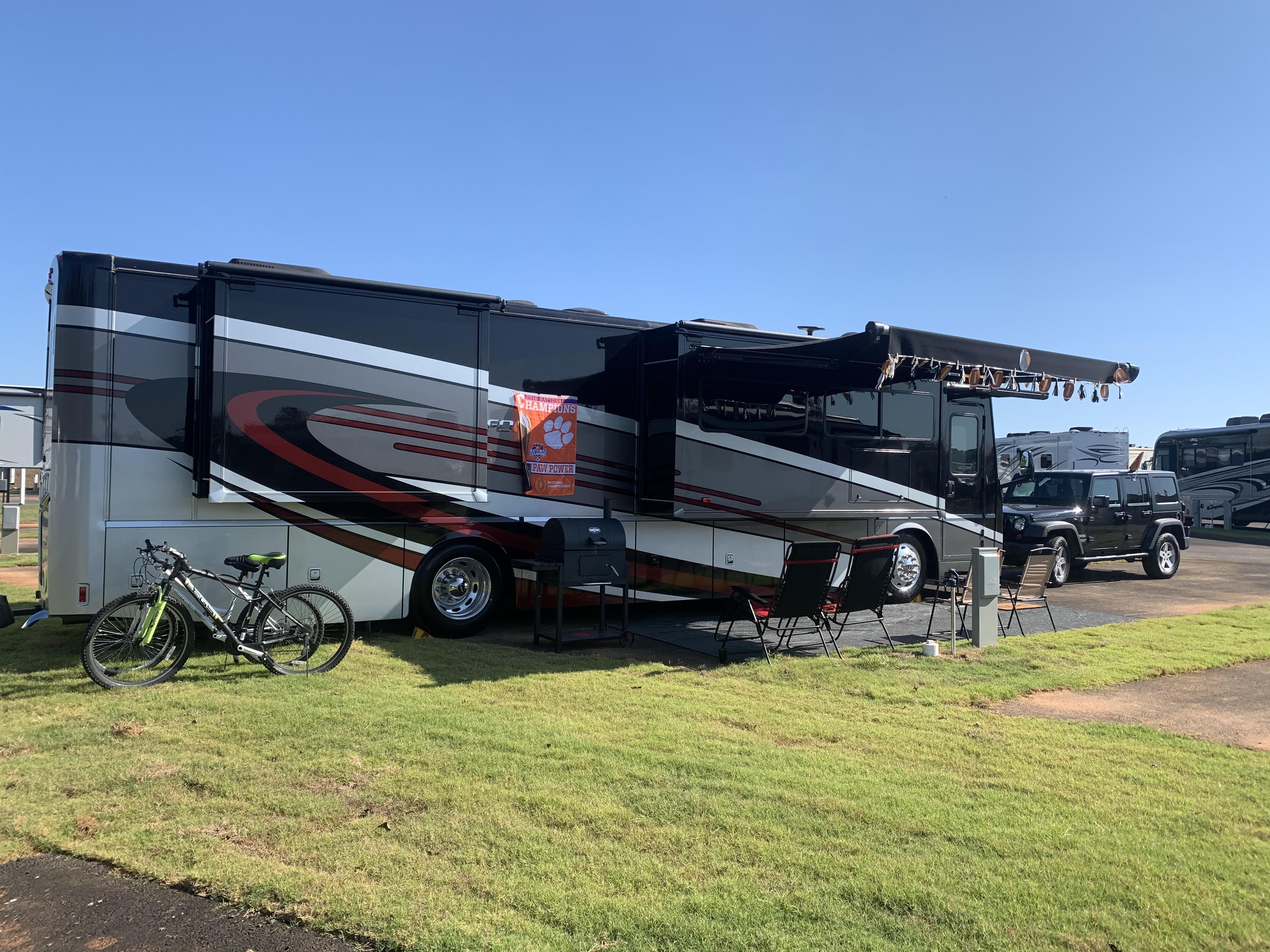
Class A Motorhome: The Rolling Palace
Anatomy: As the largest of the motorized RVs, Class A motorhomes are built on a purpose-built bus chassis or a heavy-duty commercial truck chassis. They are instantly recognizable by their massive, flat front and a panoramic windshield that offers a commanding view of the road. Ranging from 26 to 45 feet in length, they are the titans of the RV world.
Lifestyle: This motorhome class is designed to provide the most expansive living space, often feeling like a small apartment on wheels. Class A motorhomes offer numerous high-end features, including multiple slide outs that dramatically increase interior room, residential-sized appliances, and luxurious appointments like king-sized beds and fireplaces. The vast underbelly compartments provide an unparalleled amount of storage space.
Ideal User: These vehicles are perfectly suited for large families, full-time RVers, and discerning travelers who place the highest premium on space, comfort, and luxury. They can comfortably sleep between six and ten people.
Key Considerations:
- Class A motorhomes range from $100,000 to well over $600,000 for new models.
- They have the lowest gas mileage, typically averaging 6 to 13 mpg.
- Their sheer size can be intimidating to drive and park in tight spaces.
- The substantial weight of these vehicles, often exceeding 26,000 pounds, may also necessitate a special driver’s license in some states.
Class B Motorhome (Camper Van): Freedom in a Smaller Package
Anatomy: Also known as camper vans, Class B motorhomes are the most compact motorized RVs. They are constructed within the original shell of a full-size van, such as a Mercedes-Benz Sprinter or Ford Transit, and are built on a van chassis. Typically ranging from 17 to 24 feet in length, they are the epitome of mobile efficiency.
Lifestyle: A B RV is a masterclass in maximizing a small footprint, utilizing clever, multi-functional designs often borrowed from nautical engineering. Life in a Class B is about minimalism and mobility. They offer fewer amenities and have limited storage space, but their great advantage is the ability to go almost anywhere a regular van can, including standard parking spots and narrow scenic roads.
Ideal User: These vans are tailor-made for solo travelers, adventurous couples, or anyone who values a nimble, smaller vehicle for exploring cities and remote areas without the hassle of a separate “toad.” They generally sleep two to four people.
Key Considerations:
- Excellent fuel economy, averaging 18 to 25 mpg.
- The primary trade-off is the constrained living space.
- While ingeniously designed, the compact quarters can be challenging for more than two people or for extended trips where more space means more comfort.
Class C Motorhome: The Versatile All-Rounder
Anatomy: Often considered the happy medium, the Class C motorhome is a perfect blend of the space of a Class A and the drivability of a Class B. It is built on a cutaway truck chassis, which means it retains the original cab of the truck or van it’s based on. Its most recognizable feature is the over-cab area, a space above the cockpit that typically houses an extra bed or serves as a large storage compartment. Class C models generally range from 20 to 41 feet long.
Lifestyle: Class C campers offer a superb balance of amenities and maneuverability. Many class C motorhomes feature slide outs, a private rear bedroom, and a more spacious kitchen and bathroom than a Class B, making them a popular and comfortable choice for families and small groups sleeping four to seven people.
The Power of Subclasses: Class C Variations
The Class C category includes specialized variations that cater to more specific needs. Understanding these can help find the perfect fit.
Super C: This is a standard Class C built on a more powerful, heavy-duty commercial truck chassis, often with robust diesel engines. Resembling a semi-truck from the front, a Super C provides superior towing capacity, more storage, and a more commanding road presence than its standard counterparts.
Class B+: This is a sleeker, more aerodynamic version of a Class C that forgoes the over-cab bed, instead using that space for an entertainment center or extra storage. It offers more interior room and more amenities than a Class B but is often more maneuverable than a full-size Class C, as they are built on the same chassis but with a more streamlined profile.
Towable RVs: Your Detachable Basecamp
Towable RVs offer a different approach to adventure, providing a comfortable and often spacious home base that can be detached from its towing vehicle.
Fifth Wheel: King of the Towables
Anatomy: Fifth wheel trailers are among the largest and most luxurious towable RVs. They are distinguished by a raised front section, known as a “gooseneck,” that extends over the truck bed of a heavy-duty pickup truck. This design creates a unique bi-level living space.
The Hitch is the Hero: The defining feature of a fifth wheel is its specialized hitching mechanism. Unlike a bumper-pull trailer, the fifth wheel’s hitch places the trailer’s weight directly over the truck’s rear axle. This positioning provides a significant advantage in physics, drastically reducing the potential for trailer sway at high speeds and making the rig more stable and easier to maneuver, especially when backing up.
Lifestyle: The split-level design creates a spacious, residential feel. The raised front section typically houses a master bedroom and bathroom, effectively separating the sleeping quarters from the main living space below. With ample room for multiple slide outs, large kitchens, and comfortable living areas, fifth wheel trailers offer an abundance of more room and comfort, making them ideal for long-term stays.
Key Requirements:
- A fifth wheel requires a compatible pickup truck with the specialized hitch installed in its bed.
- This is a non-negotiable requirement and a significant cost consideration, as not all trucks are equipped for this task.
Travel Trailer: The Versatile Workhorse
Anatomy: Travel trailers represent the most diverse category of towable RVs, with models ranging from tiny teardrops under 15 feet to 40-foot family behemoths. All travel trailers connect to a towing vehicle via a ball-and-coupler assembly, commonly known as a standard trailer hitch. Because they are pulled from the bumper area, they are often referred to as bumper pull travel trailers.
Lifestyle: The experience in a travel trailer varies dramatically with its size. Small trailers are perfect for minimalist weekend adventures, while larger class models are fully equipped for extended family vacations, often featuring bunkhouses, multiple sleeping arrangements, and more amenities.
Towing Flexibility:
- A key advantage of the travel trailer is the wide range of tow vehicles that can be used.
- A lightweight pop-up trailer can often be towed by a minivan or small SUV, while larger models will require a large SUV or pickup truck.
- This flexibility makes the RV lifestyle accessible to a broader audience who may already own a suitable vehicle.
Specialty Campers: Niche Solutions for Specific Adventures
Truck Campers
A truck camper is a unique RV unit that slides directly into the truck bed of a pickup truck, essentially converting it into a makeshift motorhome.
Pros:
- Unbeatable mobility for off-road and remote camping.
- Because the camper occupies the bed, it frees up the truck’s hitch to tow other items like a boat or ATV trailer.
Cons:
- The living space is extremely compact.
- You cannot move from the camper to the driver’s cab without going outside, which can be a safety concern in certain situations.
Pop-Up Trailers
These are lightweight campers featuring collapsible canvas or hard-sided walls that “pop up” at the campsite to create a surprisingly spacious interior.
Pros:
- Highly affordable.
- Easy to store in a standard garage.
- Can be towed by many family vehicles, including minivans and crossovers.
Cons:
- Require significant setup and takedown time.
- Offer minimal insulation from weather and noise.
- The canvas must be completely dry before being stored to prevent mold and mildew, which can be a serious hassle if it rains on departure day.
Toy Haulers
A toy hauler is a type of fifth wheel or travel trailer that includes a versatile garage space in the rear. This area features a large ramp door, making it perfect for transporting motorcycles, ATVs, kayaks, or other “toys.” The garage can often convert into additional living space or sleeping space once the toys are unloaded.
Insider Knowledge: Essential Tips for Every RVer
Navigating Campground Rules: The “10-Year Rule” Explained
Many prospective buyers, especially those considering used models, are concerned about the “10-Year Rule.” This is an unwritten but prevalent policy at some private RV parks and upscale resorts that restricts access for RVs older than 10 years. The motivation behind this rule is not just about maintaining a modern aesthetic; it’s a risk-management tool for park owners. It helps them prevent liability from poorly maintained rigs that might have fluid leaks or faulty wiring, and it avoids the legal and financial headaches of dealing with broken-down, non-movable RVs that tenants abandon.
However, this rule is often a flexible guideline rather than a strict ban. The key to navigating it is proactivity. If you own a well-maintained older or vintage RV, the best approach is to call the park when booking, explain the excellent condition of your rig, and offer to email recent photos. A clean, presentable, and mechanically sound RV is almost always granted an exception.
Finding Your Travel Rhythm: The “3-3-3 Rule” for Better Road Trips
One of the most common rookie mistakes is trying to do too much, too fast, leading to travel burnout. The RV community has developed a widely adopted best practice—not a law—to ensure a more sustainable and enjoyable travel pace: the “3-3-3 Rule”.
The “3-3-3 Rule” for Sustainable Travel
- Drive no more than 300 miles per day. Driving a large recreational vehicle is more mentally and physically taxing than driving a car. Limiting daily mileage combats driver fatigue, which studies have shown can be as impairing as driving under the influence.
- Arrive at your destination by 3 p.m. This simple guideline is crucial. Arriving in the afternoon provides a generous buffer of daylight to safely navigate the campground, back into your site, manage hookups, and troubleshoot any issues without the added stress of darkness. It also ensures the campground office is likely still open for check-in and questions.
- Stay for at least three nights. This commitment guarantees at least two full, uninterrupted days for relaxation, exploration, and enjoying the destination. It transforms the trip from a frantic series of setups and teardowns into a genuine vacation. For shorter weekend getaways, a flexible alternative like the 2-2-2 Rule (200 miles, 2 p.m. arrival, 2-night stay) can be applied.
On the Right Side of the Law: A Primer on RV Driver’s Licenses
A major source of anxiety for new RVers is the question of licensing. The good news is that for the vast majority of RVs—including all Class B motorhomes, most Class C motorhomes, and nearly all travel trailers—a standard Class C driver’s license is all that is required.
A special license typically becomes a consideration only when a vehicle’s Gross Vehicle Weight Rating (GVWR)—the maximum total safe weight of the vehicle and its contents—exceeds 26,000 pounds. This primarily affects drivers of large Class A motorhomes and those with heavy-duty pickup truck and large fifth wheel combinations. Even then, most states require a non-commercial special license (such as a Non-Commercial Class A or B), not a full Commercial Driver’s License (CDL), unless the vehicle is used for business purposes.
Laws vary by state, but the most critical insight is reciprocity. You only need to be licensed according to the laws of your home state (the state that issued your driver’s license). Thanks to nationwide reciprocity agreements, that license is valid across the country. The single most important action is to check the specific requirements with your home state’s DMV. This information does not constitute legal advice.
Making Your Final Decision
Checklist for Choosing Your Perfect RV
- Budget (Total Cost of Ownership): What is a realistic budget not just for the purchase price, but for the ongoing costs of insurance, fuel, maintenance, and storage? These can add thousands to the annual cost of ownership.
- Travel Style (The Philosophy): Are you a “Tourer” who values on-the-go convenience for cross-country trips, or a “Destination Camper” who wants a flexible basecamp for regional exploration?
- Crew Size: How many people need dedicated sleeping arrangements? This will quickly narrow the options. A Class B RV is ideal for couples, while a bunkhouse fifth wheel or larger class travel trailer is built for families.
- Towing Capacity: Is there a capable towing vehicle already in the driveway, or will the budget need to accommodate the purchase of a new pickup truck or large SUV? This can be a massive hidden cost.
- The Comfort vs. Mobility Spectrum: Where does the priority lie? Is it on having more space, more room, and more amenities for a comfortable living experience, or is it on the freedom of a smaller vehicle that is easy to drive and park anywhere?
The research is complete. The next step is to move from the page to the pavement. The best way to solidify a choice is to experience these vehicles firsthand. Renting a few different RV types for a weekend can provide invaluable insight. Visiting a local RV show allows for easy comparison of dozens of models. Finally, scheduling a visit to a dealership can provide the hands-on experience needed to make a confident and exciting decision. The open road awaits.