
Why maintenance and safety matter in RV travel
Embarking on a road trip in a motorhome or tow vehicle is an exciting way to explore the country, but keeping your family safe should always come first. Taking a few simple steps to check your RV and trailer before hitting the road will help prevent blowouts, breakdowns and unexpected repair bills. Routine maintenance also protects your investment; repairing a roof or axle after neglect is far more expensive than preventive care. Thoughtful preparation means you arrive relaxed, set up easily and have time to enjoy the amenities at a campground instead of worrying about surprises.
Keep an eye on tire pressure
Tires are the only points of contact between your vehicle and the road, so maintaining the proper pressure is essential. Correct pressure ensures that each tire has the right amount of rubber on the road for stability, handling and braking. Under‑inflated tires create excess heat and wear unevenly, increasing the risk of a dangerous blowout. Over‑inflated tires reduce contact area, leading to poor traction and longer stopping distances.
A tire pressure monitoring system (TPMS) provides real‑time alerts if a tire’s pressure or temperature goes out of range. Modern direct TPMS units use small sensors mounted inside each tire, typically on the valve stem, to measure pressure and temperature continuously. The sensors transmit data wirelessly to a display in the cab or to a smartphone app. Direct systems are more accurate than indirect systems because they measure actual pressure rather than inferring it from wheel speeds. Indirect systems, which use the vehicle’s anti‑lock brake sensors, may not trigger an alert if all four tires are equally low. They also require manual recalibration after a tire rotation or pressure change, whereas direct systems do not.
When selecting a TPMS, consider how many wheels you need to monitor (tow vehicle plus trailer), whether the sensors are internal or external and whether you need a signal repeater. Flow‑through sensors can stay on the valve stem while you add air, which simplifies pressure adjustments. Smartphone integration lets you track pressures on your phone and receive alerts when something is wrong. Installing a TPMS might feel like an extra expense, but it delivers peace of mind, helps prevent costly tire damage and may even improve fuel efficiency by keeping rolling resistance low.
Understanding recommended tire pressure for trailers
Every tire is designed to carry a specific load at a specific pressure. For example, Goodyear’s Endurance ST225/75R15 radial tire (load range E) has a maximum capacity of about 2 830 pounds per tire at 80 PSI; the same tire can safely carry only about 1 430 pounds per tire when inflated to 25 PSI. If you reduce the pressure too far for the load, the sidewalls flex more and generate heat, which accelerates wear and increases the risk of failure. Etrailer’s experts note that 45 PSI is the lowest pressure they recommend per tire for a trailer weighing around 3 800 pounds. That guideline shows why you should never assume that 40 PSI or 50 PSI is close enough; always consult the tire manufacturer’s load chart and inflate your tires based on the actual weight of your trailer.
Here are some tips:
- Check pressures cold. Measure pressure when the tires have not been driven for at least three hours; driving heats them and increases pressure.
- Use a quality gauge. Cheap gauges can be inaccurate. Digital gauges are easy to read.
- Adjust for load. Inflate to the pressure required for your trailer’s weight. If your rig is fully loaded for a long trip, you may need to increase pressure.
- Replace aged tires. RV tires often age out before they wear out. Look at the date code and replace tires after about six years, even if the tread looks good.
By maintaining the right pressure, you distribute weight evenly across the tread, reduce rolling resistance and extend tire life.
Weight distribution and towing rules
Loading and towing a trailer requires more than just hooking up and driving away. Improperly distributed cargo can cause sway, poor handling and premature wear on your tow vehicle. Follow these guidelines for safe towing:
- 60 / 40 rule. When loading a trailer, position about 60 percent of the cargo weight in front of the trailer axle and 40 percent behind. This improves stability and reduces sway.
- Tongue weight. The downward force on your hitch should be about 10 to 15 percent of the total trailer weight. Too little tongue weight can cause sway; too much can overload the rear axle and reduce steering control.
- 80 percent rule. When choosing a trailer, aim for a loaded weight that is no more than 80 percent of your tow vehicle’s maximum towing capacity. This margin of safety accounts for passengers, cargo and miscalculation, and it reduces stress on your engine, transmission and brakes.
Weight distribution hitches (WDH) are valuable tools for larger trailers. A WDH uses spring bars and brackets to transfer some of the tongue weight to the tow vehicle’s front axle and the trailer’s axles. You should consider using one whenever your trailer weighs 50 percent or more of the tow vehicle’s weight or if the rear of your tow vehicle sags when hitched up. Equal‑i‑zer and other high‑quality hitches are known for their sway control and weight transfer features. Always follow the manufacturer’s installation instructions and check the brackets and torque settings regularly.
Battery maintenance keeps the power flowing
Deep‑cycle batteries power your lights, water pump, refrigerator and electronics when you are not plugged into shore power. Unfortunately, many RV batteries die prematurely because of neglect. A lead‑acid battery can lose up to 10 percent of its charge per month in storage. Leaving a battery in a low state of charge allows sulfate crystals to build up on the plates, leading to sulfation and eventual failure.
Follow these steps to extend battery life:
- Top off monthly. If possible, plug the RV in for about eight hours once a month to recharge and top off the batteries.
- Monitor the state of charge. Check the voltage at least monthly and recharge any battery that drops below about 12.5 volts.
- Use a maintainer. A smart charger or battery maintainer can keep batteries at a float charge of around 13.2 volts without overcharging.
- Check water levels. For flooded lead‑acid batteries, inspect the electrolyte level monthly and add distilled water until it is about ⅛ inch below the vent well.
- Disconnect during storage. Turn off the battery disconnect switch when storing the RV to avoid parasitic loads (clocks, detectors, boards) that slowly drain the battery.
- Remove batteries in long‑term storage. If you store your RV for several months, remove the batteries and keep them on a maintainer.
With proper care, RV batteries should last five to seven years.
Caring for your RV roof
Your roof shields you from rain and sun. Different materials require specific care, but regular inspection and cleaning prolong any roof’s life. For thermoplastic polyolefin (TPO) roofs, experts recommend cleaning at least twice a year—once in spring and once in fall—using a soft brush and a mild soap solution. Avoid petroleum‑based or citric cleaners, which can damage the membrane. After cleaning, inspect for punctures, tears or loose seams and repair them promptly. Limit foot traffic on the roof and use walk pads where access is necessary. Applying a UV protectant helps extend the life of the TPO material, and a professional inspection each year can catch issues you might miss.
PVC roofs have heat‑welded seams and are known for durability, energy efficiency and low maintenance. They reflect sunlight, keeping your RV cooler, and they require only simple cleaning and periodic checks. Whatever roof material you have—EPDM rubber, TPO or PVC—inspect it regularly, clean it gently and reseal any seams or edges as needed. A neglected roof can let in water, damaging insulation, walls and cabinetry.
Pre‑trip safety inspection
A simple inspection before each trip ensures your rig is road‑ready. Experts recommend checking these items before you leave:
- Brakes and suspension. Inspect brake pads, rotors and drums, and ensure the emergency breakaway cable is connected. Look for loose or worn suspension components.
- Tires and wheels. Check tread depth, sidewall condition and torque on lug nuts. Verify pressure and replace worn tires.
- Lights and signals. Test headlights, brake lights, turn signals and marker lights. Replace bulbs or fuses as needed.
- Propane and gas systems. Inspect lines and connections for leaks, make sure appliances operate properly, and confirm detectors are working.
- Electrical and battery systems. Test the shore‑power cord, converters and inverters; ensure batteries are charged.
- Safety equipment. Confirm that smoke detectors, carbon‑monoxide detectors and fire extinguishers are present and functional.
- Weight distribution and hitch. Make sure the hitch is secured, safety chains are crossed and connected, and that weight‑distribution components are properly tensioned.
Carrying an emergency kit with extra fuses, bulbs, tire repair items and basic tools can also save the day. Taking a few minutes to inspect your rig reduces the chance of being stranded on the side of the highway.
Plan your journey with smart travel rules
Long days behind the wheel lead to fatigue, slower reaction times and increased risk of accidents. Full‑time RVers often follow simple numeric rules to stay fresh and enjoy their trips.
The 3‑3‑3 rule means drive no more than 300 miles in a day, arrive at your destination by 3 PM and stay at least three nights. Limiting driving to about 300 miles per day prevents exhaustion and allows time for rest stops and sightseeing. Arriving by mid‑afternoon gives you daylight to set up and handle any issues, and staying three nights turns your campsite into a home base, allowing two full days to explore and relax. This pace also saves fuel and reduces wear and tear.
For shorter trips, the 2/2/2 rule recommends driving about 200 miles per day, resting every two hours and arriving early enough to stay at least two nights or by 2 PM. This schedule builds buffers for construction delays or full campgrounds and leaves time to cook, hike or simply relax.
Many RV parks limit the age or appearance of rigs. Some private parks enforce a 10‑year rule, which means they may refuse entry to RVs older than about ten years. The intent is usually to maintain aesthetics or avoid long‑term tenancy issues. However, enforcement is inconsistent and most parks focus on condition rather than age. Keeping your RV clean, well‑maintained and presentable can help you avoid issues at upscale resorts.
Weight distribution hitches and when to use them
A weight distribution hitch is an additional component between your tow vehicle and trailer. It uses spring bars to distribute some of the tongue weight across both axles of the tow vehicle and to the trailer. This improves handling, reduces sagging and provides sway control. Over 99 percent of customers recommend the Equal‑i‑zer hitch for its sway control and weight distribution features, and it’s built from high‑quality steel for durability. When selecting a hitch, look for one rated for your trailer’s tongue weight and gross trailer weight, and consider a model with built‑in sway control for added stability.
A hitch calculator or tools like the OnTarget system can help you determine whether you need a weight distribution hitch and calculate your weight distribution percentage. Proper installation often requires professional assistance; knowledgeable dealers can help you select and install the correct hitch for your setup. Check the hitch’s fasteners and torque settings before every trip, and follow the manufacturer’s guidelines for maintenance.
Protect your investment and enjoy the journey
Maintaining your RV isn’t glamorous, but it’s the key to safe, stress‑free adventures. A TPMS alerts you to pressure problems before they become blowouts. Proper tire pressure and weight distribution improve handling and fuel economy. Smart travel rules like the 3‑3‑3 rule help you arrive relaxed. Routine battery care prolongs battery life, and regular roof cleaning keeps water out. With these habits, you protect your family, your investment and the gear you rely on every day.
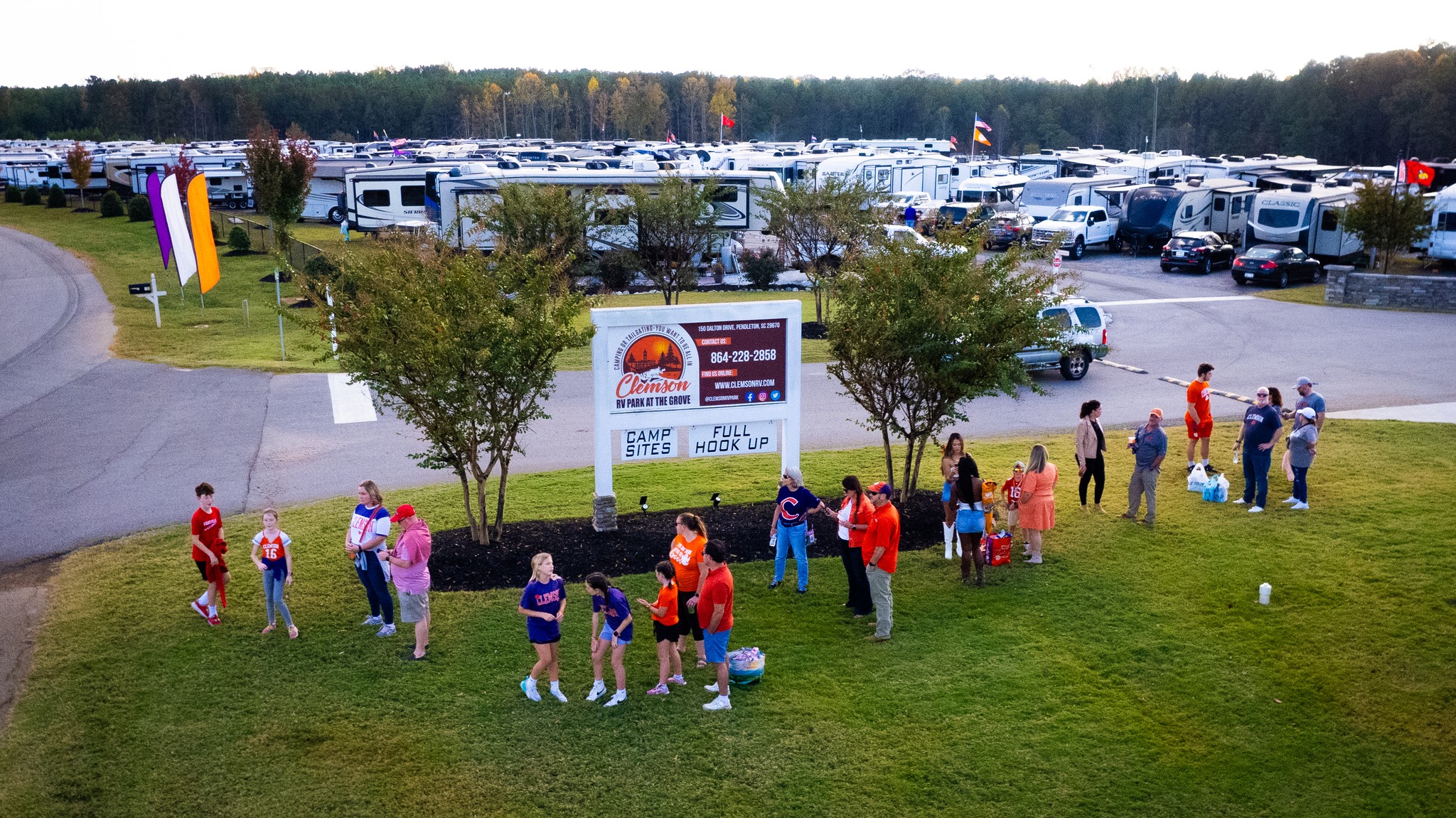
Clemson RV Park welcomes guests from across the country who value safety and comfort. We provide full hookups, spacious sites and friendly service so you can focus on making memories. Whether you’re staying a couple of nights or settling in for a longer trip, following this checklist ensures that your rig remains reliable and that your vacation time is spent exploring, relaxing and enjoying the journey—not dealing with preventable repairs.
If you have questions about towing, weight distribution or maintenance, feel free to ask. We’re happy to help you choose the right products and practices for your rig and share tips to keep your wheels rolling smoothly all year long. Safe travels and we hope to see you soon.