
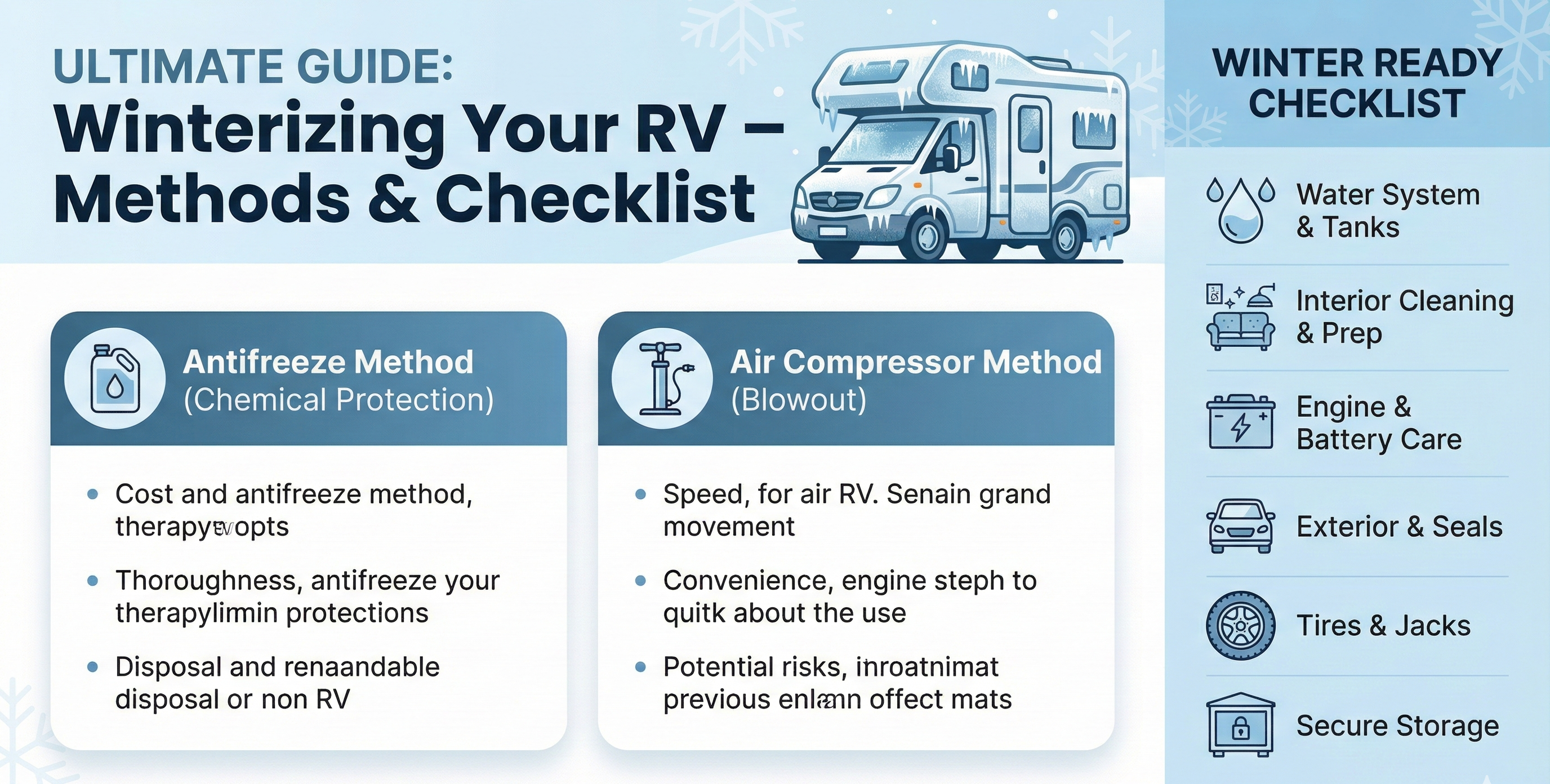
Preparing your recreational vehicle for the cold can feel daunting, especially in a place like South Carolina where winters are milder yet freeze events still happen. Many travelers near Clemson and Oconee County see January lows around 47.7 °F on average, but record lows have plunged to –8 °F and there have been winter storms, ice storms and heavy snow events over the years. Because of these swings, winterizing your RV before a cold snap helps avoid burst pipes, cracked tanks and other costly damage. This guide explains how to winterize your RV, why it matters in South Carolina and what local regulations you need to follow. You’ll get practical steps that you can carry out yourself or use when talking with a technician, and you’ll learn how to store your rig so it’s ready for Clemson tailgates and spring adventures.
Why Winterize in South Carolina?
❄️ Temperature Swings
Record lows of -8°F despite mild average winters
💧 Prevent Damage
Avoid burst pipes, cracked tanks, and costly repairs
🌊 Protect Environment
Follow SC Pollution Control Act requirements
Winterization is also about protecting the environment. South Carolina’s Pollution Control Act requires anyone planning a new or increased discharge to obtain a permit, which means gray water or sewage from your RV must be dumped at an approved station rather than on the ground. When you remove antifreeze at the end of the season, the state’s Department of Environmental Services notes that some county programs accept used antifreeze; residents should check their local recycling program or ask a mechanic for proper disposal. Following these rules keeps waterways like Lake Hartwell and the nearby Seneca and Clemson communities clean and safe.
Gathering Supplies: The Right Tools Make the Job Easier
Before starting, gather all materials so you can complete the winterization process without interruptions. Check your owner’s manual for specific instructions; every RV model has slightly different valve locations and low‑point drains. A few essential supplies include:
- RV antifreeze (propylene glycol) – This non‑toxic, pink fluid protects plumbing against freezing. Go RVing notes that RV antifreeze is different from automotive antifreeze; it uses propylene glycol and is safe for fresh water lines. Most rigs need between two and four gallons.
- Water heater bypass kit – Bypassing the water heater prevents antifreeze from filling the heater tank.
- Compressed air and blowout plug – If you plan to blow out water lines, a small air compressor and adapter for the city water connection help remove residual water.
- Hand tools – Screwdrivers, pliers and wrenches allow you to remove drain plugs and access valves.
- Short hose or siphoning kit – For pumping antifreeze through the water pump.
- Buckets and towels – Useful for catching water and avoiding spills.
- Sealant and roof patch – Inspect your roof and seals for cracks and repair them before winter.
Local auto parts stores around Pendleton and Clemson often stock RV antifreeze and winterizing kits. Because Oconee County is near major highways like U.S. 29 and I‑85, you can also find supplies at larger retailers in Anderson or Greenville. If you enjoy convenience, Clemson RV Park at The Grove provides full hook‑ups, making it simple to drain tanks and access water before winter.
5-Step Water System Winterization Process
Drain & Flush Holding Tanks
Empty black water first, then gray water at approved dump stations. Rinse thoroughly to remove waste and prevent odors.
Drain the Freshwater System
Open low-point drains, all faucets, and drain the water heater. Remember to bypass the water heater to avoid filling it with antifreeze.
Blow Out Remaining Water
Use compressed air at 30 PSI through a blowout plug. Open each faucet until no water sprays out, including toilet and outdoor shower.
Pump RV Antifreeze Through Lines
Close all drains and pump non-toxic RV antifreeze (propylene glycol) through every faucet, showerhead, and spigot until pink fluid flows.
Protect P-Traps & Toilet
Pour antifreeze into sink and shower p-traps and the toilet bowl. Leave small amount in toilet to protect seals.
Protecting Plumbing and Fixtures
Aside from the water lines, other components need attention to avoid damage.
Add Antifreeze to P‑Traps and Toilet Bowls
Each sink and shower has a small U‑shaped drain called a p‑trap. These traps hold water to block sewer gases from entering the RV. During winter, the water can freeze and crack the trap. Pour a cup of RV antifreeze down each drain until you see pink liquid in the trap. Add antifreeze to the toilet bowl and flush until pink fluid appears in the holding tank inlet. Leave a small amount of antifreeze in the bowl to protect the flush valve seals.
Insulate Pipes and Let Faucets Drip
If you plan to camp in cold weather rather than fully winterize, insulate exposed pipes and keep water moving. The South Carolina Department of Insurance suggests insulating water lines with heat tape, insulation or even newspapers. The state’s Emergency Management Division adds that allowing faucets to drip slightly prevents freezing. In an RV, you can wrap foam pipe insulation around lines in unheated areas and use a heated water hose at the campsite. Keep cabinets under sinks open to allow warm air circulation, and run a small space heater or the RV’s furnace on low to protect pipes during short cold snaps.
Bypass Ice Makers and Appliances
Some RVs have refrigerators with ice makers or washing machines. Check the manufacturer’s manual for specific winterizing procedures. Generally, you should flush water out of the appliance and add antifreeze to the lines. For ice makers, turn them off, disconnect the supply line and let residual water drain. For washing machines, run a short cycle with RV antifreeze to protect the pump and hoses.
Holding Tank Preparation and Maintenance
Winterizing involves more than just adding antifreeze. Proper care of holding tanks extends their life and prevents unpleasant surprises.
Drain and Clean Tanks Properly
After emptying the black and gray tanks, clean them thoroughly. Many RVers use a tank wand or built‑in flush system to spray the sides. Add a cup of diluted bleach to the gray tank and run it through each drain to sanitize. Use an enzyme‑based cleaner in the black tank to break down waste. Finally, leave the dump valves closed during winter; leaving them open can allow pests and odors to enter. In Oconee County and across South Carolina, disposing of sewage improperly can contaminate waterways. The Pollution Control Act requires permit approval before discharging wastewater, so always use authorized dump stations.
Add Antifreeze for Freeze Protection
Once cleaned, pour a small amount (one to two quarts) of RV antifreeze into each holding tank. The antifreeze mixes with any remaining liquid and keeps sensors and seals from freezing. You don’t need to fill the tanks completely; just enough to cover the bottom is sufficient. Remember that antifreeze should not enter the freshwater tank.
Use Odor Control Products Sparingly
Some RVers place dryer sheets or special deodorizer packets inside tanks to reduce odor. If you choose to add odor control, pick products that are septic safe and compatible with RV systems. Avoid bleach in black tanks, as it can damage seals and sensors. A mixture of water softener and detergent can help break up debris.
Propane Tank and Fuel Safety
Propane supplies heat, cooking and refrigeration, but it needs careful handling. Remove portable propane cylinders and store them upright in a ventilated area away from flame sources. If you have built‑in tanks, close the valves and check for leaks using a soapy water solution. Do not store cylinders inside the RV; South Carolina Department of Insurance reminds homeowners to vent fuel‑burning equipment to the outside, and the same applies here. For longer storage, consider using an electric heater or ceramic space heater instead of propane. Always follow manufacturer instructions and local regulations for transporting and storing propane.
Battery and Electrical System Protection
Cold temperatures can drain batteries quickly. Disconnect your RV battery and store it in a warm, dry location. Use a trickle charger or battery maintainer to keep it charged throughout the off‑season. Clean the terminals and coat them with dielectric grease to prevent corrosion. Unplug all appliances and remove fuses for any circuits you won’t use. A surge protector helps guard against power spikes if you leave your RV plugged in for long‑term storage. Remember to remove portable electronics and small appliances like toasters or coffee makers to reduce fire risk.
Interior Preparation
A clean, dry interior discourages mold, mildew and pests. Wipe down counters, cabinets and the refrigerator. Remove perishable food and open boxes to avoid attracting rodents. The state’s winter weather guide encourages residents to have an emergency kit ready; you can repurpose this idea by creating a storage kit with spare batteries, lightbulbs and weatherproof tape to keep in your RV. Use a small dehumidifier or moisture‑absorbing crystals to reduce humidity during storage. Consider sprinkling baking soda in the refrigerator and placing dryer sheets near bedding to deter pests. Close blinds to protect fabrics from UV exposure.
Exterior Preparation
Winter storms can take a toll on paint, roof seams and tires. Proper exterior care will keep your rig looking sharp and prevent leaks.
Wash, Inspect and Seal
Wash your RV thoroughly to remove dirt, bugs and road grime. While cleaning, inspect the roof, walls and slide‑out seals. Repair any cracks with appropriate sealant and ensure all seams are watertight. Go RVing suggests using UV‑protected covers and sealant to protect against weather damage. If you have an awning, clean and dry it before rolling it up.
Cover and Skirt the RV
An RV cover or skirt provides an extra layer against snow, ice and sun. Choose a breathable, mildew‑resistant cover that fits your rig. For those storing outdoors, skirting around the base can block wind and cold air, reducing the chance of pipes freezing. Check that the cover does not flap excessively in the wind, which can cause abrasion.
Protect Vents and Windows
Cover roof vents with vent covers to prevent moisture and debris from entering. Install foam or plastic insulation in windows and use reflective panels to reduce heat loss. Check seals and gaskets around windows and doors; replace worn weatherstripping. If your RV has a sunroof or skylight, ensure it is sealed and consider applying clear protective film.
Tire and Wheel Care
Tires can develop flat spots when left in one position. Inflate them to the recommended pressure and consider placing the RV on blocks or jack stands to remove weight from the tires. Cover each tire to protect it from UV rays and precipitation. Use a tire protection spray to keep the rubber conditioned. Check your wheel bearings and grease them if necessary. Make a note of tire manufacture dates and plan to replace any tires older than six years, as age contributes to blowouts.
Skirting and Storage Options
Skirting for Cold Weather
Skirting an RV means enclosing the space beneath the rig to reduce cold air flow. You can use foam board, vinyl skirting or purpose‑built systems. Skirting helps maintain interior warmth and reduces the load on your heating system. For travelers staying at Clemson RV Park during winter football games, skirting can make tailgating more comfortable.
Choosing a Storage Location
Where you store your RV influences how it fares during winter. Indoor storage in a warehouse or barn provides the best protection but may cost more. Outdoor storage on your own property can be safe if you use a high‑quality cover and choose a level, well‑drained area away from trees. When parking near Anderson or Pendleton, be mindful of falling branches during winter storms. Some storage facilities offer covered parking at a lower cost than fully enclosed bays. Plan ahead, as indoor spaces often fill early in the season.
Final Inspection and Record Keeping
Once you complete winterization, conduct a final walkthrough. Check that all faucets are closed, drains are sealed and the water heater is bypassed. Verify that pink antifreeze is visible in every drain and toilet. Ensure that all propane valves are closed, batteries are disconnected and vents are covered. Record what you did in a logbook, including the date, amount of antifreeze used and any repairs made. This log will help you or a professional de‑winterize the RV in spring. If you are uncomfortable performing any of these steps, hiring a professional at a local RV service center or scheduling winterization with Clemson RV Park can give you peace of mind.
Off‑Season Maintenance and Upkeep
Winterization isn’t a one‑time task; you need to keep an eye on your RV during the off‑season.
- Check the RV monthly. Inspect for leaks, tears in the cover and signs of pest intrusion. Verify that tires remain properly inflated and reposition them slightly to avoid flat spots.
- Maintain battery charge. Top off the battery every four to six weeks with a trickle charger and check voltage; a fully charged 12‑volt battery should read around 12.7 volts.
- Ventilation. On dry days, briefly remove the cover and open a few windows to allow fresh air in and reduce moisture buildup.
- Plan for de‑winterization. As spring approaches and daytime temperatures consistently rise above freezing, gather supplies for de‑winterizing: freshwater tank sanitizer, new filters and test strips. De‑winterize by flushing antifreeze out of the system, sanitizing the freshwater tank and checking all systems before your first trip.
💡 Pro Winterization Tips & Reminders
Never Use Automotive Antifreeze
Only use non-toxic RV antifreeze (propylene glycol) safe for freshwater lines
Don’t Fill Fresh Tank
Leave freshwater tank empty and drained—antifreeze goes through lines only
Dispose Properly
Use authorized dump stations and check local recycling for used antifreeze
Keep a Log
Record date, antifreeze amount, and repairs for spring de-winterization
Protect Batteries
Disconnect and store in warm location with trickle charger
Cover Your RV
Use breathable, UV-protected cover and consider skirting for extra protection
Common Questions About RV Winterization
How do you winterize an RV step by step?
Start by draining and flushing the black, gray and freshwater tanks at an approved dump station. Open low‑point drains and all faucets to clear the lines. Bypass and drain the water heater. Use compressed air to blow out remaining water. Then use a siphon kit to pump non‑toxic RV antifreeze through the water pump and into every faucet, showerhead and toilet until you see pink fluid. Pour antifreeze into all p‑traps and the toilet bowl. Finally, disconnect the battery, store propane safely and cover the RV.
What is the 3‑3‑3 rule for RV travel?
The 3‑3‑3 rule is a guideline for relaxed road trips. According to Cruise America, it encourages you to drive no more than 300 miles per day, arrive at your destination by 3 p.m., and stay for at least three nights. Limiting mileage reduces fatigue and allows time for breaks, staying multiple nights lets you enjoy your surroundings, and arriving early ensures you have daylight for setup.
Is it okay to put RV antifreeze in the fresh water tank?
No. Go RVing explains that the freshwater tank should be drained but should not contain antifreeze. Instead, the antifreeze travels through the pump and lines. You will need to sanitize the freshwater tank in spring before using it again.
Can I just pour RV antifreeze down the drain?
You should pour antifreeze into p‑traps and the toilet bowl to protect seals, but do not dispose of large amounts down household drains or onto the ground. South Carolina’s Department of Environmental Services notes that some county programs accept antifreeze and residents should check local recycling options or ask mechanics to take it. Proper disposal prevents contamination.
Do you leave faucets open after winterizing an RV?
After pumping antifreeze through the system, close the faucets to keep the antifreeze in the lines. Leaving them open can allow contamination and evaporation. During cold snaps when camping without winterizing, leaving faucets slightly open can prevent freezing, but once winterized, keep them closed.
Should I leave antifreeze in my RV toilet bowl?
Yes. Leaving a small amount of RV antifreeze in the toilet bowl protects the seals and the flush valve. The antifreeze prevents remaining water from freezing and cracking the bowl or seal.
Local Context and Travel Tips
Winter in the Clemson area offers unique opportunities. Clemson University hosts sporting events and holiday celebrations, while nearby Lake Hartwell and the Blue Ridge Mountains provide hiking and fishing options year round. Roads like SC Highway 183 and U.S. 123 wind through rolling hills, and occasional snow or ice can create beautiful scenes but require caution. The South Carolina Emergency Management Division advises residents to keep an emergency kit with shovels, rock salt and warm clothing. When traveling by RV, carry extra blankets, water and non‑perishable snacks, and monitor weather forecasts. If a winter storm approaches, follow the 3‑3‑3 rule and plan to arrive early at Clemson RV Park to secure your site.
At Clemson RV Park at The Grove, you can enjoy tailgating and winter camping. The park sits in Historic Pendleton near Clemson University and offers full hook‑ups with water, sewer and 30/50 amp power, and 65‑foot flat sites designed for rigs up to 45 feet. The campground hosts catered dinners, live bands during football season, fall festivals and spring barbecue competitions. When you stay in winter, you can use the park’s full hookup to drain tanks and add antifreeze easily. The location near Lake Hartwell and major highways makes it a convenient base for exploring Upstate towns like Anderson and Seneca.
Need Help Winterizing Your RV?
Clemson RV Park at The Grove offers full hook-ups and convenient facilities to make winterization easy. Located near Historic Pendleton and Clemson University, we’re your home base for tailgating, camping, and safe RV storage.