

Key Takeaways
- A 30 amp RV provides up to 3,600 watts (120V × 30A) and is standard on smaller travel trailers, Class C motorhomes, and rigs under 30 feet.
- A 50 amp RV delivers up to 12,000 watts using two 120V legs (50A each), making it the go-to choice for larger fifth wheels and Class A motorhomes.
- Adapters let you plug a 30 amp RV into 50 amp pedestals and vice versa, but they never increase your RV’s actual power capacity.
- Your choice between 30 and 50 amps comes down to RV size, how many air conditioning units you want running simultaneously, and your future upgrade plans.
Choosing between 30 amp vs 50 amp rv service is one of the most important decisions RV owners face. Get it wrong, and you’ll spend your camping trip juggling appliances and dealing with tripped breakers. Get it right, and you’ll enjoy comfortable, stress-free travel regardless of the weather outside.
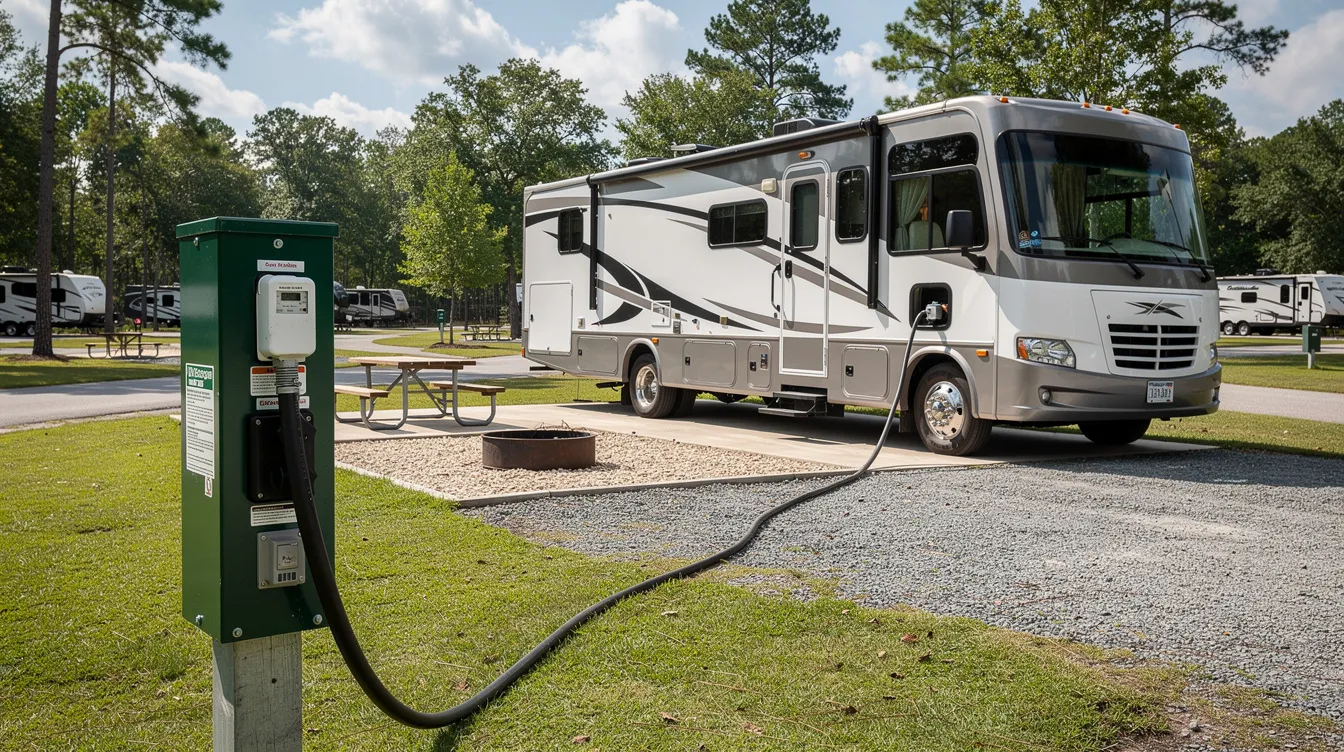
Understanding RV Amps, Volts, and Watts
Before diving into the specifics of each system, understanding how electricity flows through your RV helps you make smarter decisions about power usage and capacity.
RV electrical systems operate on three key measurements. Amps measure the current flowing through your wiring. Volts represent the pressure pushing that current. Watts tell you the total power being consumed. The formula connecting them is simple: watts = volts × amps.
Virtually all U.S. campground hookups supply 120V ac electricity through shore power connections. This means amperage becomes the variable that determines your total wattage capacity:
- 30A at 120V = 3,600W maximum
- 50A split-phase (two 120V legs) = up to 12,000W available
Staying under your total watt capacity is critical. Exceeding it trips your circuit breaker and cuts power to your rig. Repeatedly pushing limits—especially on older RVs built before 2010—can cause heat buildup, voltage drop, and premature failure of compressors and electronic devices.
What Is 30-Amp RV Service?
30-amp service has been the standard for smaller rvs, including many travel trailers, older Class C motorhomes, and smaller fifth wheels up to roughly 30 feet in length.
The physical plug is a 3-prong NEMA TT-30 featuring one 120V hot wire, one neutral, and one ground. These electrical outlets have been common at most U.S. campgrounds since the 1980s, making 30-amp hookups the most widely available power source nationwide.
Maximum capacity: 30A × 120V = 3,600 watts
Here’s a realistic load scenario that pushes that limit fast:
- 13.5K BTU air conditioner: 1,500–1,800W
- Microwave: 1,000–1,500W
- Electric water heater: 1,500W
That combination alone can hit 4,800W—well beyond your capacity.
What 30-amp rigs can typically run:
- One air conditioner
- Refrigerator
- Television and lights
- Small kitchen appliances (with careful management)
Most 30 amp rv owners practice “power juggling”—turning off the electric water heater when running the microwave, or avoiding hair dryers while the AC runs. This appliance usage strategy becomes second nature.
30-amp rigs from manufacturers like Forest River, Jayco, and Keystone are generally cheaper to buy and feature simpler wiring that’s less expensive to repair. Using a dogbone adapter, these RVs can also plug into 15/20A household outlets or 50A pedestals—though their internal system still tops out at 30A.
What Is 50-Amp RV Service?
50-amp service is the go-to option for large fifth wheels, luxury travel trailers, and Class A diesel pushers built after about 2005. It’s designed for rv owners who want to run multiple high-draw electrical appliances without constant load management.
The 50-amp plug is a 4-prong NEMA 14-50 featuring two 120V hot legs, one neutral, and one ground. Each hot leg can supply up to 50 amps at 120 volts, giving you substantially more power.
Maximum capacity: 50A × 120V × 2 = 12,000 watts
This means you can run:
- Two 15K BTU air conditioning units (3,000–3,600W total)
- Residential refrigerator (600–800W intermittently)
- Microwave (1,000–1,500W)
- Washer/dryer combination
- Electric fireplace or induction cooktop
However, individual branch circuits still have their own 15/20/30A breakers. You can’t run every appliance simultaneously without limits—you simply have far more headroom.
50-amp service commonly pairs with higher-end features from brands like Grand Design and Tiffin, including heat pump systems, hydronic heating, and residential-style appliances.
A 50 amp rv can plug into a 30-amp pedestal using a 30-to-50 adapter, but is then limited to 3,600W total. This often forces owners to turn off one AC unit or avoid running multiple high-draw appliances together.

30 Amp vs 50 Amp RV: Side-by-Side Comparison
RV buyers often debate 30A vs 50A when shopping for a rig or booking campgrounds. Here’s a clear breakdown of the key differences:
| Feature | 30-Amp Service | 50-Amp Service |
|---|---|---|
| Maximum Wattage | 3,600W | 12,000W |
| Plug Type | 3-prong (NEMA TT-30) | 4-prong (NEMA 14-50) |
| Hot Legs | One 120V leg | Two 120V legs |
| Air Conditioners | One unit | Two air conditioners possible |
| Typical RV Size | Travel trailers, smaller motorhomes | Fifth wheels, Class A coaches |
| Campground Availability | Very common | Growing, but less common at older parks |
Cost implications: 50-amp rigs and sites may cost more upfront, but provide crucial comfort in hot climates like Arizona, Texas, and Florida during summer months.
Campground realities: Many older or rural parks still offer primarily 30A-only sites, while newer resorts built after 2015 tend to provide 50A at every RV pad. Some parks charge identical rates regardless of service level, while others impose a modest $2–5 surcharge for premium 50-amp spots.
Usage scenarios:
- Weekend boondocking or shoulder-season camping works fine with 30A
- Full-time families or hot-weather travelers usually prefer 50A for enough electricity to stay comfortable
How Amperage Affects Appliance Use in Real Life
The practical difference rv owners feel day-to-day is how much electricity you can use simultaneously without tripping the main breaker.
30-Amp Real-World Limits
Running these together will likely trip your breaker:
- Air conditioner (1,800W)
- Microwave (1,200W)
- Electric water heater (1,500W)
Total: 4,500W — exceeds 3,600W capacity
Strategies for 30A users:
- Stagger appliance usage (microwave first, then AC)
- Use propane for water heating instead of electric
- Avoid running space heaters with AC operating
50-Amp Real-World Freedom
50A owners can often run two ACs, a residential refrigerator, and a TV simultaneously. However, turning on multiple resistance heaters or an induction cooktop while everything else runs can still approach limits.
Common Appliance Wattage Reference
| Appliance | Typical Amp Draw | Wattage |
|---|---|---|
| 13.5K BTU AC | 12–15A | 1,500–1,800W |
| Microwave | 8–12A | 1,000–1,500W |
| Electric water heater | 12–16A | 1,500–2,000W |
| Space heater | 12–15A | 1,500W |
| Hair dryers | 10–15A | 1,200–1,800W |
| Residential fridge | 5–7A | 600–800W |
Repeatedly running close to maximum on older wiring and undersized cords causes heat buildup and premature failure of AC compressors and electronics. Regular maintenance of your electrical system helps prevent these electrical issues.
Using Adapters, Extension Cords, and Generators with 30A and 50A RVs
Adapters and rv generators provide flexibility, but they don’t magically transform your RV’s power capacity.
Understanding Dogbone Adapters
- 50A pedestal to 30A RV: Your RV still maxes at 3,600W
- 30A pedestal to 50A RV: Entire rig limited to 3,600W
- 15/20A household outlet to 30A RV: Limited to 1,800–2,400W
The adapter simply changes plug configuration—your RV’s internal amp rating remains the hard ceiling.
Generator Sizing
| RV Type | Minimum Generator | Recommended for Full Comfort |
|---|---|---|
| 30A RV | 3,000–3,600W | 4,000–5,000W portable generator |
| 50A RV | 7,000W | 10,000–12,000W or paralleled inverter generators |
A built in generator on larger motorhomes typically handles 50A loads, but rv generator maintenance and fuel filters should be part of routine maintenance. For diesel generators, spark plugs aren’t a concern, but regular maintenance of fuel systems is essential.
Extension Cord Warnings
Long, undersized extension cords—especially 14-gauge household cords over 50 feet—create serious voltage drop and fire risk. Use heavy 10-gauge or 8-gauge power cord options for any temporary run longer than 25 feet.
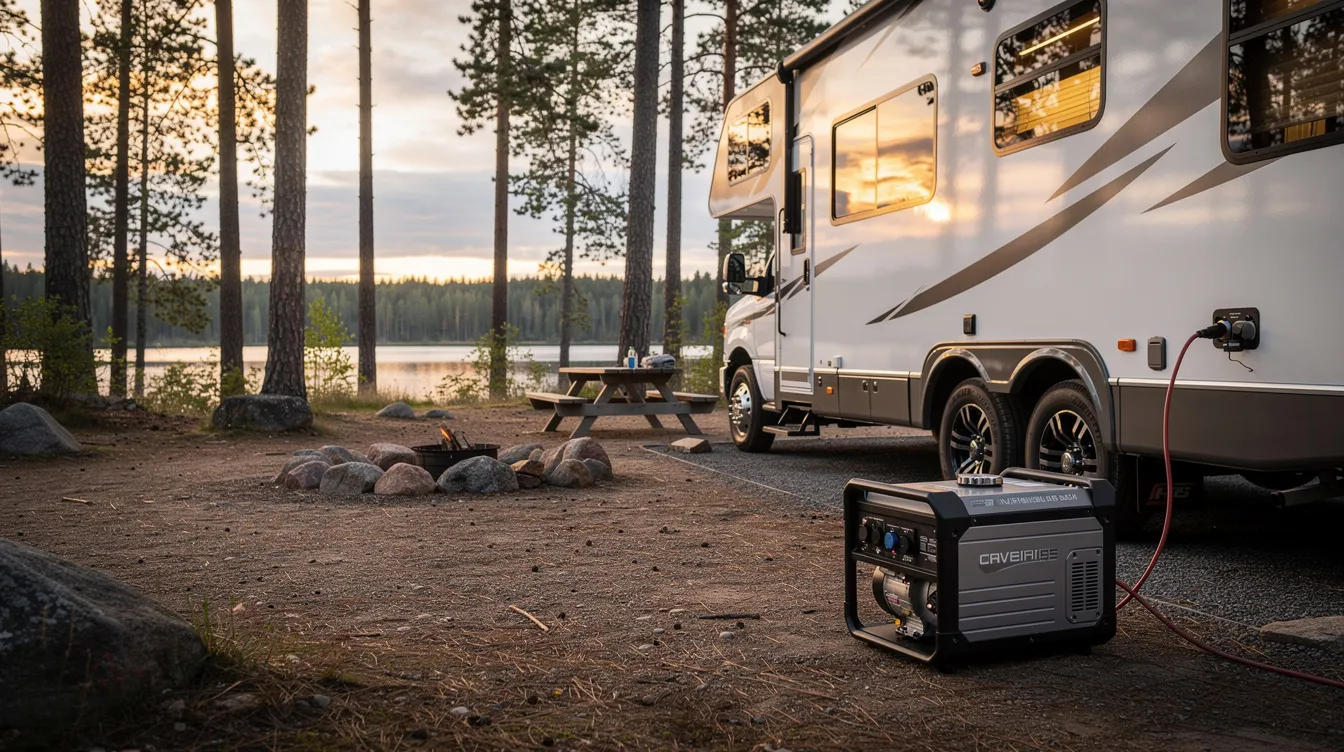
Many RVers now pair their rigs with lithium batteries and inverter/charger systems for quiet off-grid power supply. Some even add solar panels for supplemental charging. However, shore power limits at campgrounds still apply when plugged in.
Should You Upgrade from 30 Amp to 50 Amp Service?
Converting an existing 30A RV to 50A service is a major project and often not cost-effective on older units built before approximately 2010.
A true upgrade involves:
- Replacing the shore power inlet (NEMA TT-30 to NEMA 14-50)
- Upgrading the main panel and breaker
- Running new heavier-gauge wiring (typically 6-gauge)
- Possibly replacing the automatic transfer switch and converter
Professional upgrades in North America typically run from $800 to over $2,500 as of 2024, depending on RV age, access difficulty, and component requirements.
For pre-2010 trailers, selling and buying a factory-built 50A rig may be safer and more economical than a full rewiring job. Factory systems carry manufacturer warranties and proper engineering validation.
Critical safety note: Only qualified RV electricians or certified technicians should perform such upgrades. DIY electrical work on RVs violates manufacturer warranties, may violate RVIA standards, and creates genuine fire hazards and electrical shock risks.
Step 1: Assess Your Existing Electrical System
Before committing to an upgrade, determine if your RV is even a good candidate for 50A conversion.
Key components to inspect:
- Shore power cord condition (damage, corrosion, brittleness)
- Inlet connector and connection quality
- Main breaker panel (corrosion, loose terminals, arcing signs)
- Wire gauge from inlet to panel
- Age and condition of branch circuit wiring
Check your owner’s manual or wiring diagram to confirm wire sizes and maximum ratings. Consult NEC guidelines or RVIA standards on conductor sizing, or have a technician verify that framing and cavities can safely route thicker cables.
Step 2: Plan and Prepare for the Upgrade
Always disconnect from shore power, disable the generator, and disconnect batteries before touching any wiring.
Components typically needed:
- New 50A shore cord (6-gauge conductors)
- 50A inlet rated for RV service
- 50A main breaker panel or combination panel
- Appropriate gauge wiring (6/3 with ground)
- Possibly new automatic transfer switch
Use personal protective equipment including insulated tools, eye protection, and gloves. Work in dry conditions with adequate lighting. Get written quotes from at least one RV service center before purchasing components to avoid mid-project surprises.
Step 3: Replace and Rewire Safely
This step should typically be performed by a professional, but understanding the process helps you evaluate workmanship.
Major tasks involved:
- Removing old 30A inlet and cord
- Installing 50A inlet with proper weather sealing
- Running new heavy-gauge cable to the new panel
- Connecting both 120V legs, neutral, and ground correctly
- Balancing loads between hot legs for optimal performance
All connections must be carefully torqued, strain-relieved, and tested under load. A final inspection—including voltage checks across both legs—is recommended before regular use. Consider surge protectors or an EMS system to protect your investment from power surges and lightning strikes at poorly maintained campground pedestals.
Tips for Managing Power on 30A and 50A Hookups
Even on 50A hookups, efficient power use prevents nuisance trips, protects appliances, and extends the life of your electrical system.
For 30A Users
- Use propane for water heating and refrigeration when possible
- Avoid running electric space heaters with AC operating
- Sequence high-draw tasks: microwave first, then start the AC
- Keep hair dryers and curling irons for times when AC is off
- Regularly checking your breaker panel helps catch electrical issues early
For 50A Users
- Avoid running multiple resistance heaters unnecessarily
- Keep surge protectors or EMS devices in line for protection
- Periodically check pedestal voltage for brownouts
- Even with more power, generator maintenance matters for off-grid backup
- Heat buildup still occurs if connections are loose—inspect annually
Energy monitoring tip: Portable plug-in wattmeters or built-in monitor panels help track real-time amp draw and identify “hog” appliances. Knowing your actual consumption makes load management effortless.
Seasonal strategies: In hot states during July–August, 50A service is strongly preferred for running multiple ACs. During spring and fall shoulder seasons, many travelers comfortably camp with 30A and minimal cooling needs—about an hour of AC in the afternoon often suffices.
How to Decide: Do You Need a 30-Amp or 50-Amp RV?
There’s no one-size-fits-all answer. The best choice depends on your specific electrical needs, budget, and camping style.
Key questions to guide your decision:
- RV length and weight: Smaller motorhomes and trailers under 30 feet typically function well at 30A
- Number of air conditioners: One unit = 30A works; two = strongly consider 50A
- Travel regions: Hot/humid climates favor 50A; mild regions (Pacific Northwest, New England fall) accommodate 30A
- Usage pattern: Weekend campers manage fine with 30A; full-time families benefit from 50A
30A is usually adequate for:
- Couples’ trailers and minimalist rigs
- Shorter trips in cooler climates
- Budget-conscious first-time RV owners
50A is usually preferred for:
- Large family fifth wheels
- Luxury Class A coaches
- Full-time rigs with residential appliances
- Work-from-RV setups requiring consistent power
If you’re looking at 2022–2026 model years and sitting on the fence, lean toward 50A if you expect to keep the rig for many years. The additional power capacity provides flexibility for future appliance upgrades and ensures comfort regardless of where your camping trip takes you.
FAQs About 30 Amp vs 50 Amp RV Service
Can I Safely Plug a 50-Amp RV into a 30-Amp Pedestal?
- Yes, using a 30A-to-50A adapter works safely, but your entire RV is then limited to 30A (3,600W)
- Turn off at least one AC unit and avoid running multiple high-draw appliances together
- This setup is common at older campgrounds and is perfectly safe when loads are managed
- Consider carrying this adapter standard—you’ll encounter 30A-only sites more often than expected
Is It Cheaper to Own and Camp with a 30-Amp RV?
- 30A RVs are typically less expensive to purchase with simpler, cheaper-to-repair electrical systems
- Many campgrounds charge identical nightly rates for 30A and 50A sites
- Some resort-style parks charge $2–5 extra for premium 50A spots
- Long-term cost differences come primarily from rig type (luxury vs basic) rather than amp rating alone
Can I Run a 30-Amp RV from a Standard House Outlet?
- Yes, using a proper adapter allows connection to 15/20A 120V home outlets
- You’re limited to 1,800–2,400W total—enough for battery charging, refrigerator, and small loads
- Avoid running AC and microwave together on household circuits
- For frequent home use, have a licensed electrician install a dedicated 30A or 50A RV receptacle
Does a 50-Amp RV Use More Electricity Than a 30-Amp RV?
- The amp rating sets maximum available power, not what you must consume
- A 50A RV only uses more energy if you run more or larger appliances
- Electric bills (at home or metered campgrounds) are based on kilowatt-hours consumed
- Efficient users can keep costs similar on either system through proper maintenance and smart usage
Will a 50-Amp RV Work in Campgrounds That Only Have 30-Amp Hookups?
- Yes, with a 30A adapter, a 50A RV connects to 30A-only pedestals and operates as a 30A rig
- Check campground listings carefully—older state parks and remote sites often lack 50A service
- Be prepared to limit usage during hot spells when AC demand peaks
- Carry surge protection or an EMS system regardless of service type—older pedestals can have tripped breakers and voltage issues that require protection